Google, the tech giant, announced yesterday that its new Generative Artificial Intelligence chatbot, the Gemini app is available in India. For now, the app can only be downloaded by those who use android phones from the Play Store, while iOS users will get “Gemini in the Google app” within weeks, as the company put it. Further to this, Google has also brought to India 'Gemini Advanced' which is a premium version of the same. These two AI chatbots will be offered in English as well as nine other Indian languages,
Wednesday, June 19, 2024
Wednesday, April 17, 2019
OnePlus 7 and 7 Pro's display and camera details surface
Yesterday we saw renders of the OnePlus 7 OnePlus 6T. The source also said that the images of a OnePlus smartphone with pop-up selfie camera we were treated to earlier were actually showing the OnePlus 7 Pro. Today, that same source has shed some more light on how these smartphones will differ. The OnePlus 7 will feature a 6.4-inch waterdrop notch display and sport a dual camera setup at the back with a 48MP main sensor. The Pro variant, on the other hand, will be built around a tad larger 6.64-inch notch less screen with curved edges. The smartphone will have a triple camera setup at the back, which too, will include a 48MP primary unit. The other two snappers in the system will be equipped with a telephoto and an ultra-wide angle lenses. The source also reveals that the third smartphone in the lineup will be called OnePlus 7 Pro 5G. We don't have any details about this one, but it's safe to say that it will just be a 5G-supporting version of the Pro variant having Snapdragon X50 modem under the hood. OnePlus is said to unveil these smartphones on May 14, and until then, we will likely hear a lot more about them.
which revealed that this 2019 OnePlus flagship will look a lot like last year's
Tuesday, April 9, 2019
Google Maps to inform you about traffic jams more quickly
Google Maps may be doing a pretty decent job at indicating the amount of congestion on your route. It is, now, reportedly adding a new feature that will tell you about traffic jams more quickly.
A new option, called Slowdowns, has been spotted on the app. Using the feature; people can report slowdowns, allowing Google Maps to gather this data more quickly and with increased accuracy, 9 to 5 Google reports.
The feature is labelled as either ‘congestion’ or ‘slowdown’ depending on your location. The feature is tucked in the new incident reporting button in the Google Maps app.
Monday, April 8, 2019
Realme 3 Pro set to take on Xiaomi Redmi Note 7 Pro, key specifications revealed
Realme has already announced it will launch a Xiaomi Redmi Note 7 Pro-competitor this month. Dubbed as Realme 3 Pro, the smartphone is expected to be an upgraded version of Realme 3 with better processor and camera.
Company CEO Madhav Sheth on Monday confirmed the company will be launching the phone at Delhi University stadium this month.
Ahead of its official launch in India, Realme 3 Pro key specifications have been revealed. According to reports, the smartphone will be powered by Qualcomm Snapdragon 710 processor. It’s worth noting that Snapdragon 710 SoC is considered to be an upgraded chipset over Snapdragon 675 SoC that runs on Xiaomi Redmi Note 7 Pro.
Realme’s next smartphone will be available in multiple RAM and storage combinations starting at 4GB of RAM and 32GB built-in storage. Realme 3 Pro is also expected to sport a 48-megapixel rear camera. The latest reports, however, suggest the phone will have Sony IMX519 camera sensor. Redmi Note 7 Pro offers 48-megapixel camera resolution via Sony IMX586 sensor. Other expected features from Realme’s new phone includes Vooc fast charging support.
Xiaomi Redmi Note 7 Pro full specifications include 48MP Dual camera, Qualcomm Snapdragon 675 processor, 6.3-inch dot notch display, Corning Gorilla Glass 5, Type-C Port, 4,000mAh battery, and up to 6GB of RAM. The smartphone is available at a starting price of Rs 13,999.
Sunday, April 7, 2019
How To Record WhatsApp Calls On Android
WhatsApp is a great messenger app with a number of features including both video and audio calls. But there is one feature that has been missing for a while (even in modded apps) and that is call recording. Of course, there is a major concern of misuse with call recordings, but sometimes we desperately need it.
If you want to record WhatsApp calls there are a few workarounds, but it’s not fool-proof as it also depends on the smartphone you are using. That being said, this is your best bet right now. So, here is how you can record WhatsApp calls on Android.
How to record the calls
- Install Cube Call Recorder app ( its free) and open it. Grant all the necessary permissions and you are good to go.
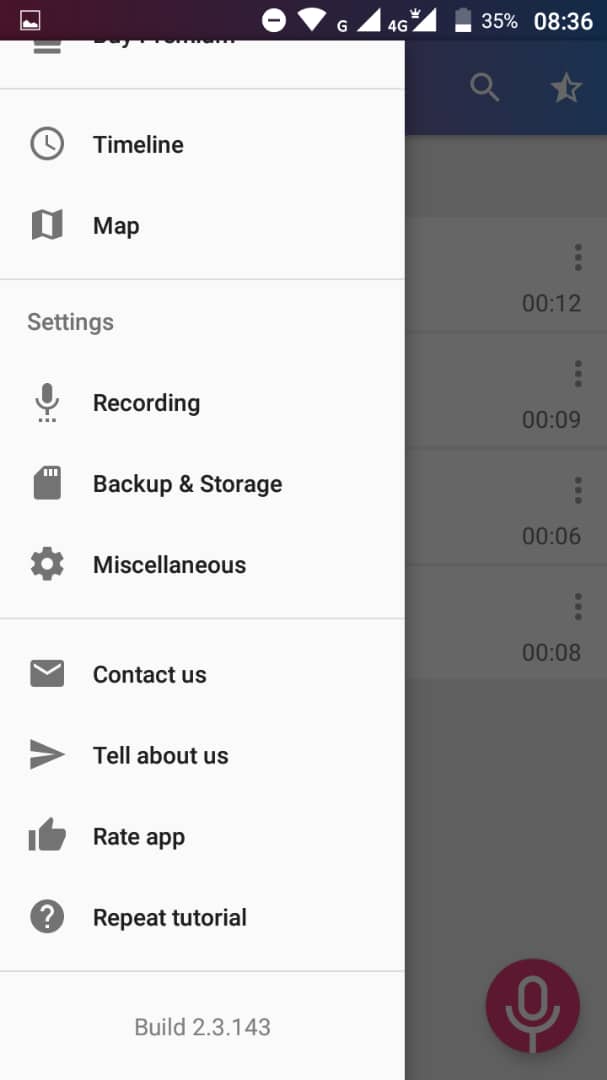
2. Now open WhatsApp and make a call, a widget should appear on your screen indicating it’s recording your WhatsApp call. If the widget doesn’t appear then manually tap on the microphone icon in the Cube Recorder app. It will start recording your call thereafter.
3. In some cases, the recordings don’t have audio from the other side. To fix this issue, tap on the menu and open “Recording”. Change “VoIP recording” audio source to “Microphone”.
4. You are good to go, you can now record your calls. Besides WhatsApp calls, you can use this app to record cellular calls as well. In my testing, WhatsApp call recording worked flawlessly on my ZTE BA602 without changing the default settings.
The Different types of "CROSS-SITE SCRIPTING."
Cross-site scripting (XSS) a common vulnerability that is carried out when an attacker injects malicious JavaScript into a website, which then targets the website’s visitors. By doing so, the attacker may gain access to users’ cookies, sensitive user information, as well as view and/or manipulate the content that is shown to the user.
Reflected XSS
Reflected XSS means that the payload is reflected, i.e. the server reads it from the request and includes it as part of the response as well.
An attack like this requires getting the user to click on a link that includes the payload. There are several ways to achieve this; sending the link as an email or buying advertisements on a website that you know the victim is going to visit are two potential ways.
Stored/Persistent XSS
Persistent or Stored XSS means that the payload is saved on the actual page, not in the request that is then reflected.
As the malicious JavaScript is saved on the page, this attack does not necessarily require you to send the victim any specific link. It depends on where on the page it is saved. If the XSS is in the latest searches you can just wait until the victim uses the search function by themselves. However, if it is stored in a specific forum thread you might need to send the victim a link to that post.
DOM XSS
When you visit a website, the server generates some HTML and JavaScript which it sends back to your browser. Your browser will then interpret all this and you will see the result on your screen. JavaScript can modify what you see and this is also called modifying the DOM (Document Object Model).
DOM XSS is the catch-all term for when the attacker’s JavaScript is not interpreted directly as a result of the source you get from the server, but rather ends up being interpreted after existing JavaScript on the page has modified the DOM to include it.
DOM XSS could be much more complex than this. The JavaScript does not have to read the value from the URL, there are lots of other potential sources. Two examples would be
postMessage or that the JavaScript sends a xhr-request to another API.
If a DOM XSS reads the value from the URL this similarly to reflected XSS requires you to share a specific link with the victim to exploit it. However, if it is caused by the server sending an API request to get the latest search terms, the impact would be similar to the persistent XSS.
Friday, April 5, 2019
Samsung sees lowest quarterly profit in more than two years
Samsung Electronics Co Ltd said on Friday it was heading for its lowest quarterly profit in more than two years as a glut in memory chips, slowing panel sales and rising competition in smartphones hit margins.
The South Korean tech giant said first-quarter operating profit likely slid 60 per cent from a year earlier, missing market expectations and putting it on track for its weakest quarterly profit since late 2016.
Samsung supplies memory chips and screens for its own smartphones and Apple Inc, and server chips for cloud companies such as Amazon. Its semiconductor business is the main profit driver.hares in Samsung rose briefly before paring gains to trade flat following the guidance, as many investors are already looking ahead to an earnings recovery on the back an improvement in chip prices in the second half of the year.
“In the second half, memory chip prices will have a soft landing, so falls will slow, and the release of new iPhones later seems like a good sign for Samsung’s display and memory chips,” said Kim Yang-jae, an analyst at KTB Investment and Securities.
The world’s biggest maker of smartphones and memory chips said in a filing January-March profit was likely 6.2 trillion won ($5.5 billion), missing the 6.8 trillion won estimate from analysts according to Refinitiv SmartEstimate.
Revenue likely fell 14 per cent from a year earlier to 52 trillion won. The firm will disclose detailed earnings in late April.
Samsung shares were flat as of 0120 GMT, while the broader market up 0.2 percent.
The firm earlier had warned the quarter could be disappointing due to falls in memory prices, and slowing demand for display panels used in Apple’s iPhones.
Samsung’s premium Galaxy smartphones meanwhile are struggling to be profitable due to rising costs of innovation, competition from Chinese rivals and the reluctance of consumers to upgrade, analysts have said.
HIT BOTTOM
Samsung’s share price has leapt more than 25 per cent since sinking to a two-year low in early January as some investors bet on a recovery in chip demand.
SK Hynix Inc, Micron Technology Inc and Samsung - which dominate the global market for dynamic random access memory, or DRAM, chips used in personal computers, smartphones and servers - recently have issued upbeat assessments of the prospects for a recovery in chip prices.
Hopes were buoyed further when data showed the manufacturing sector in China, the world’s biggest smartphone market, unexpectedly returned to growth for the first time in four months in March.
Samsung is betting a new line-up of smartphones including a foldable handset and a 5G-enabled model will help boost its market share in China, which crashed with the advent of cheaper Chinese rivals like Huawei Technologies Co Ltd.
But its latest phones are expensive to make, weighing on profitability even as its sells faster than its predecessor, analysts say.
“New smartphones coming out in the second half won’t necessarily help its smartphone business, but will be a plus for Samsung’s chip side as those phones require high density chip adoptions,” said Park Sung-soon, an analyst at BNK Securities.
Thursday, April 4, 2019
Apple watch with OLED screens
Japan will begin to supply organic light-emitting diode (OLED) screens for the Apple Watch later this year, two sources said, a breakthrough for the cash-strapped company whose late shift to OLED has cost it orders from Apple.
The supply deal would mark Japan Display’s foray into the OLED display market, the two sources familiar with the matter said, declining to be identified because they are not authorized to speak to the media.
Japan Display’s mainstay liquid crystal display (LCD) business has been slumping due to Apple Inc’s recent shift away from LCD, and disappointing sales of the iPhone XR, the only LCD model in Apple’s 2018 line-up. Aspokesman for Japan Display said he could not comment on specific customers.
The OLED display market is dominated by Samsung Electronics unit Samsung Display and LG Display, with Chinese players quickly catching up. OLED displays are generally thinner and allow more flexibility than LCD screens.
Samsung Display is currently the exclusive supplier of OLED panels for iPhones, while LG Display provides a majority of panels for the Apple Watch.
Hiroshi Hayase, senior director at IHS Markit, said it is a positive step for Japan Display, but added that the company would face a tough road ahead.
“Hurdles would be high to win orders for iPhones,” Hayase said. “Samsung Display has built up its experience, technologies and production capacity over more than a decade. Can Japan Display really compete with such a rival and make ends meet?”
Shares of Japan Display jumped as much as 7.6 percent in Tokyo trade on Wednesday after the Reuters report. The stock finished up 6.3 percent at 84 yen.
Japan Display, which gets more than half of its revenue from Apple, has a small OLED pilot line at a smartphone screen plant in eastern Japan.
It is seeking investment from a group that includes China Silkroad Investment Capital (CSIS), sources have told Reuters. The company has said it is aiming for as much as USD 990 million in fresh financing.
The Nikkei business daily reported on Wednesday the company board would vote on investment plans by the start of next week.
Japan Display and the group are planning to build an OLED panel plant in China using Japan Display’s technology to produce smartphone panels, which need a larger line that normally costs 200 billion yen (USD 1.8 billion) or more to launch, the sources told Reuters.
Japan Display’s technology uses a slightly different manufacturing method and equipment from Samsung to avoid infringing patents held by the industry leader.
Global smartwatch display shipments increased by 42 percent to reach 149 million units in 2018, driven by better synchronization functions with smartphones, according to IHS Markit.
Wednesday, April 3, 2019
BITCOIN JUMPS 20 PERCENT, MYSTERY ORDER SEEN AS CATALYST
The original cryptocurrency soared as much as 20 percent in Asian trading, breaking USD 5,000 for the first time since mid-November. Bitcoin soared to its highest in almost five months on Tuesday, pulling smaller cryptocurrencies up with it, after a major order by an anonymous buyer set off a frenzy of computer-driven trading, analysts said. The original cryptocurrency soared as much as 20 per cent in Asian trading, breaking USD 5,000 for the first time since mid-November. By mid-afternoon, it had settled around USD 4,800, still up 16 per cent in its biggest one-day gain since April last year.
Today’s gain was probably triggered by an order worth about USD 100 million spread across US-based exchanges Coinbase and Kraken and Luxembourg’s Bitstamp, said Oliver von Landsberg-Sadie, chief executive of cryptocurrency firm BCB Group. Bitcoin surged to near USD 20,000 in late 2017, the peak of a bubble driven by retail investors. But last year prices collapsed by three-quarters, with trading dominated by smaller hedge funds and crypto-related firms.
“There has been a single order that has been algorithmically-managed across these three venues, of around 20,000 BTC,” he said.
“If you look at the volumes on each of those three exchanges – there were in-concert, synchronized, units of volume of around 7,000 BTC in an hour”.
Still, analysts could not point to any specific developments that could explain the mystery buyer’s big order. Cryptocurrency markets had until today seen a period of relative calm through the year, with bitcoin trading around USD 3,300 and USD 4,200. Big institutional investors have largely stayed on the sidelines. Concern over security breaches and regulatory uncertainty were cited as reasons for the lack of mainstream enthusiasm in digital coins. In a sign of bitcoin’s failure to gain an equal footing with conventional markets, Cboe Global Markets - which offered the first US bitcoin futures contracts in 2017 - said last month it would no longer offer bitcoin futures contracts. CME Group Inc continues to list its futures product, which launched soon after Cboe. Outsized price moves of the kind rarely seen in conventional markets are common in cryptocurrency markets, where liquidity is thin and prices opaque. Big orders tend to spark buying by algorithmic traders, said Charlie Hayter, founder of industry website CryptoCompare. As bitcoin surged, 6 million trades occurred in an hour, Hayter said - three to four times the usual amount, with orders concentrated on Asian-based exchanges. Bitcoin’s surge sent smaller cryptocurrencies, known as “altcoins,” trading higher. Ethereum’s ether and Ripple’s XRP, respectively the second- and third-largest coins, both jumped by more than 10 per cent. Price moves of smaller coins tend to be correlated to bitcoin, which still accounts for just over half of the value of the cryptocurrency market. "Usually bitcoin is the leader of the market and altcoins tend to follow, as far as direction and sentiment is concerned,” said Mati Greenspan, an analyst at eToro in Israel. “Today bitcoin is in the driving seat.”
Tuesday, April 2, 2019
Smart pajamas to help you sleep
Scientists have developed ‘smart’ pajamas embedded with self-powered sensors that provide unobtrusive and continuous monitoring of heartbeat, breathing and sleep posture – factors that play a role in how well a person slumbers. The garment called ‘Phyjama’ could give ordinary people, as well as clinicians, useful information to help improve sleep patterns, said researchers from the University of Massachusetts in the US.
“Our smart pajamas overcame numerous technical challenges,” said Trisha L. Andrew, who led the team.
“We had to inconspicuously integrate sensing elements and portable power sources into everyday garments, while maintaining the weight, feel, comfort, function and ruggedness of familiar clothes and fabrics,” Andrew said in a statement. Getting enough quality sleep can help protect people against stress, infections and multiple diseases, such as heart and kidney disease, high blood pressure and diabetes, researchers said. Studies have found that quality sleep also increases mental acuity and sharpens decision-making skills. Yet most people do not get enough sleep -- or the right kind, they said. Although some manufacturers of smart mattresses claim the products can sense movement and infer sleep posture, they do not provide detailed information to the sleeper and are not portable for travel. Commercially available electronic bands worn on the wrist give information about heart rate and monitor how much total sleep the wearer gets. However, there has not been anything that a typical consumer could use to monitor posture and respiratory and cardiac signals when slumbering. The key to the smart pajamas is a process called reactive vapour deposition, researchers said. “This method allows us to synthesise a polymer and simultaneously deposit it directly on the fabric in the vapour phase to form various electronic components and, ultimately, integrated sensors,” Andrew said.
“Unlike most electronic wearables, the vapour-deposited electronic polymer films are wash-and-wear stable, and they withstand mechanically demanding textile manufacturing routines,” she said. The Phyjama has five discrete textile patches with sensors in them. The patches are interconnected using silver-plated nylon threads shielded in cotton. The wires from each patch end up at a button-sized printed circuit board placed at the same location as a pajama button.
Monday, April 1, 2019
BlackBerry forecasts higher revenue as bets on new tech pays off
The company forecast revenue growth of 23-27 per cent for the year, implying total revenue of between USD 1.13 billion and USD 1.16 billion. Analysts on average were expecting USD 1.09 billion, according to IBES data from Refinitiv.
BlackBerry, which dominated the smartphone market nearly a decade ago before losing out to Apple Inc’s iPhones and Android devices, has switched to selling software to corporations and government agencies under Chief Executive Officer John Chen.
“This was the first time in many years ... that (we) overcame the quarter-to-quarter decline in handset revenue and services fee,” Chen said on a call with analysts, indicating the transformation was now complete.
Revenue from BlackBerry’s technology and solutions segment rose nearly 20 per cent in the quarter, supported by the company’s focus on QNX, a software used by carmakers to provide infotainment and other services to customers. QNX is used in more than 120 million cars worldwide.
“We are winning the lion’s share of the deals” in the market for embedded software in auto, Chen told Reuters.
BlackBerry had 14 design wins in automotive in the fourth quarter, of which only three were for infotainment. The rest included non-infotainment applications such as software used in autonomous vehicles.
“It’s good to see them getting design wins away from infotainment ... seeing those design wins in autonomous driving is a good indicator for them,” CIBC Capital Markets analyst Todd Coupland said.
The company’s fourth quarter also benefited from a 71 per cent rise in revenue from its patent licensing division.
BlackBerry currently has over 100 patents in the application, with more from Cylance, a cybersecurity company it bought for USD 1.4 billion in February.
Licensing and intellectual property revenue was USD 99 million in the quarter.
The Waterloo, Ontario-based company’s net profit was USD 51 million, or 8 cents per share, in the quarter ended Feb. 28, compared with a loss of USD 10 million, or 6 cents per share, a year ago.
Excluding one-time items, the company earned 11 cents per share, beating the average analyst estimate of 6 cents, according to IBES data from Refinitiv.
Revenue rose 9 percent to USD 255 million.
BlackBerry’s shares were up 13 per cent at CUSD 13.47 in midday trading after touching a high of CUSD 13.71.
Sunday, March 31, 2019
Next OPPO phone has a hidden selfie camera
We all want a perfect selfie camera, but thanks to the obsession with all-screen displays, we don’t like the sight of a front camera.
There came the unfavourable notches, followed by the hole punch standard, and now, OPPO wants to hide the selfie camera in a wedge on top of its upcoming Reno smartphone.the latest video spotted on Slashleaks, the upcoming OPPO Reno smartphone appears to feature an all-screen display while the front camera is tucked in a wedge-shaped slider that pops when you launch the front camera.
As for other specifications, the 11-second clip only showcases the blue colour variant. Previous leaks indicate Reno will feature Qualcomm Snapdragon 855 SoC with 6GB/8GB of RAM, 128GB/256GB default storage, and run Android 9.
Saturday, March 30, 2019
AWS announces general availability of Amazon S3 Glacier Deep Archive
Amazon Web Services announced the general availability of Amazon S3 Glacier Deep Archive, a new storage class that provides secure, durable object storage for long-term retention of data that is rarely accessed. At just $0.00099 per GB-month (less than one-tenth of one cent, or $1 per TB-month), S3 Glacier Deep Archive offers the lowest cost storage in the cloud, at prices significantly lower than storing and maintaining data in on-premises magnetic tape libraries or archiving data off-site.
Organizations in many market segments (e.g., financial services, healthcare, and government, etc.) are required to retain data for long periods of time to meet regulatory compliance requirements. In addition, there are organizations, such as media and entertainment companies, that want to keep a backup copy of core intellectual property. These datasets are often very large, consisting of multiple petabytes, and yet typically only a small percentage of this data is ever accessed—once or twice a year at most. To retain data long-term, many organizations turn to on-premises magnetic tape libraries or offsite tape archival services. However, maintaining this tape infrastructure is difficult and time-consuming; tapes degrade if not properly stored and require multiple copies, frequent validation, and periodic refreshes to maintain data durability. Additionally, it is difficult or impossible to do machine learning and other types of analysis directly on data stored on tape. Now, with S3 Glacier Deep Archive, customers with large datasets they want to retain for long periods will be able to eliminate both the cost and management of tape infrastructure, while ensuring that their data is preserved for future use and analysis, such as in oil and gas seismic exploration and developing autonomous vehicles. Customers can still use S3 Glacier when they want retrieval options in minutes for archive data, while S3 Glacier Deep Archive is ideal for customers who want the lowest cost for archive data that is rarely accessed. In the event that recovery becomes necessary, the objects can be recovered in as little as 12 hours with S3 Glacier Deep Archive versus days or weeks with off-site tape.
Friday, March 29, 2019
UPS launches drone airline to deliver medical samples
The drone will then fly along a predetermined flight path, monitored by a trained remote pilot-in-command. In one of the first efforts towards commercialising drone delivery in the US, the United Postal Service (UPS) and Matternet are set to launch a new drone airline to deliver medical samples.
As the official press release of UPS states, the program will take place at WakeMed’s Raleigh campus with oversight by the Federal Aviation Administration and North Carolina Department of Transportation.
The sytem will use Matternet’s M2 quadcopter that is powered by a rechargeable lithium-ion battery. It will be able to carry medical payloads weighing up to about 5 lbs. over distances of up to 12.5 miles.
A medical professional will load a secure drone container with a medical sample or specimen, such as a blood sample, at one o WakeMed’s nearby facilities.
The drone will then fly along a predetermined flight path, monitored by a trained remote pilot-in-command, to a fixed landing pad at the main hospital and central pathology lab.
Thursday, March 28, 2019
AVITA launches fashionable Magus two-in-one laptop
Avita launched its first two-in-one laptop, Avita Magus, in India. Both a recreational gadget and the best partner in the office, it is completely aligned with the overarching umbrella brand’s (NEXSTGO’s) core value; “Challenge every limitation of function, technology and aesthetics, using a human-oriented approach to design innovative products.”
The Avita Magus is the ideal lightweight and versatile smart choice for the new generation. The 2-in-1 laptop comes with a 12.2” FHD touch screen that offers ultra-wide viewing angle, perfect for movies and entertainment at home. The Avita Magus can transform from a tablet into a laptop by simply opening the built-in stand, enabling users to stay productive with ease anytime, anywhere. Users can easily switch between laptop and tablet mode, whether they enjoy audio-visual entertainment or handle daily paperwork.
The Avita Magus offers a stylish solution for fashion-conscious users, with its simple, elegant line design and metallic shell available in four colors: seashell pink, steel blue, charcoal grey and pastel violet.
Wednesday, March 27, 2019
OPPO’s first 5G smartphone receives 5G CE certificate
OPPO’s 5G smartphone is also the first multi-frequency, multi-mode, and multi-EN-DC combination 5G smartphone to be approved by CTC.
OPPO announced that its first 5G smartphone has successfully passed 5G CE tests conducted by Sporton International Inc., a global inspection services authority, and was awarded a 5G CE certificate by CTC advanced GmbH. OPPO’s 5G smartphone, which was showcased at MWC 2019, is also the first multi-frequency, multi-mode, and multi-EN-DC combination 5G smartphone to be approved by CTC. The phone maintains the advantages of the n78 band – such as more band combinations and wider bandwidth, which can be applied across a broader range of countries and regions.
An integral step towards the commercial launch of its 5G smartphone in Europe, OPPO’s CE certification verifies that the OPPO 5G device is compliant with EU requirements essential for entering European markets in areas such as wireless, electromagnetic compatibility, health and safety.
Alen Wu, OPPO Global Vice President, Head of business overseas markets said, “This is another significant milestone in 5G development for OPPO. Through ongoing technological innovation, we have been preparing extensively for the realization of 5G smartphone commercialization. OPPO looks forward to continued cooperation with strong partners like Sporton that will enable consumers to get closer to 5G.”
Mr. Ivan Xie, Chief of Operation and Engineering, Sporton International, Inc. said, “We were pleased to see OPPO’s 5G smartphone perform exceptionally during the stringent tests. The results are a testament to OPPO’s technological capability and great news for users and industry alike. Drawing on our rich experience in wireless communication, Sporton will continue to collaborate with OPPO to usher in the future of 5G connectivity.”
As an advocate and a pioneer in 5G technology, OPPO has helped shape the next generation of connectivity through contributions in standards research, software and hardware development, deep consumer insight and a robust ecosystem of strong industry partners. The company recently launched its “5G Landing Project” with several operator partners to accelerate the commercialization of 5G products and services worldwide. OPPO plans to bring its first 5G smartphone to market in the first half of 2019.
Tuesday, March 26, 2019
XIAOMI SET TO RELEASE ITS NOTEBOOK
Ahead of the launch on March 26, Xiaomi has teased it's new Mi Notebook Air on it's official Weibo handle.
In a checky dig at both MacBook Air and Huawei MateBook 12, Xiaomi citing the weight of it's upcoming Mi Notebook Air as 1.07 kg, claims to have developed a lighter version of the laptop.
The company which launched the original Mi Notebook Air back in 2016, set up the device as a direct rival to Apple's MacBook Air, with it's thinness and light weight, and with similarities in the designing.
Now, Xiaomi claims to have developed an even lighter notebook, weight 1.25 kg, lighter than even Huawei's MateBook 12 which weighs 1.3 kg. In China, Xiaomi sells Mi Notebooks of multiple sizes via it's official Mi store.
Currently, the 2018 variant of the 15.6-inch Mi Notebook starts at RMB 3,399/- (about 34,000/- ).
Monday, March 25, 2019
TeamViewer 14, TeamViewer Pilot, and TeamViewer Tensor get spring feature updates
TeamViewer has announced significant new updates improving augmented reality annotations, usability and automation features and introducing conditional access to TeamViewer Tensor for enterprise customers.
“With the latest update to Pilot, TeamViewer’s augmented reality solution, users are able to help each other in the real world like never before,” says Dr. Mike Eissele, CTO at TeamViewer. “Furthermore, Tensor’s new, highly requested conditional access feature helps IT administrators of large enterprises apply, distribute, and enforce access policies - giving them full control over the use of TeamViewer in their corporate network. TeamViewer is committed to addressing the needs of private users and businesses of all sizes, thereby making the lives of IT managers easier by saving them clicks, time, and money across our solution portfolio.”
TeamViewer Pilot: Putting augmented reality at your fingertips
Free hand drawing and improved streaming performance & usability
TeamViewer Pilot expands the power of remote assistance software beyond IT support into the real world through augmented reality and enables experts to remotely guide users through complex operations via live camera-sharing, voice and on-screen annotations.
Version 1.1 of TeamViewer Pilot includes the following improvements:
Improved usability and built-in tutorials teaching users how to use the app, including placing and removing arrows.
It is now possible to free-hand draw on the screen of a mobile device, giving users and experts yet another visual format to highlight specific areas and communicate instructions.
Video streaming performance has been improved as well, especially in low bandwidth scenarios.
Simplified user-based license options that can be bought and used alongside TeamViewer subscriptions.
TeamViewer Tensor: Empowering a secure workspace for enterprises
Central management and complete control over remote connections
TeamViewer Tensor is a SaaS, cloud-based enterprise connectivity platform that can be deployed quickly and easilyacross large-scale IT infrastructures. Tensor scales linearly to meet the needs of large enterprises, providing industry-leading connectivity and real-time support tools without requiring costly hardware investments.
With Tensor’s Conditional Access, enterprise IT and security managers can now centrally manage all TeamViewer usage within their corporate network:
Within the Tensor Management Console, IT managers can leverage conditional access to ensure that all remote connections can be centrally managed and fully controlled.
IT administrators can define and modify rules to allow or deny access to TeamViewer Tensor from anywhere, at anytime – whether onsite or from remote locations.
Conditional Access aligns more closely with corporate security best-practices by enforcing access rights across the entire corporate network. IT organizations can feel more confident that security risks are minimized, and policies are consistently enforced.
TeamViewer 14.2: Helping IT administrators meet daily challenges Scripting improvements, trust management for browsers and improved user experience Speed and accuracy are essential for IT support staff, whether they’re performing routine processes or responding to emergency situations. TeamViewer 14.2 includes several new features to make their lives easier: Scriptingimprovements:With TeamViewer 14.2, it is now possible to execute scripts on Linux remote machines and a new-and-improved access control for scripts allows for easy acknowledgement or denial of script execution for incoming and outgoing connections.
Trust management for browsers: In addition to trusted devices, browsers can now also be managedwithin the TeamViewer Management Console.
Improved user experience: Users now receive a message when a connection is lost.
In addition to the above updates, all TeamViewer solutions now support an additional communication mode to significantly improve network performance within IPv6 only network setups.
Subscribe to:
Posts (Atom)